
Power Drills
Power Tools Aren’t Just for Professionals Anymore
Jan
For many people, the phrase power tools still brings to mind construction sites, workshops, and skilled professionals. They seem loud, heavy, complex—and slightly intimidating. As a result, countless homeowners and renters assume power tools simply aren’t meant for them.
But this perception is increasingly outdated.
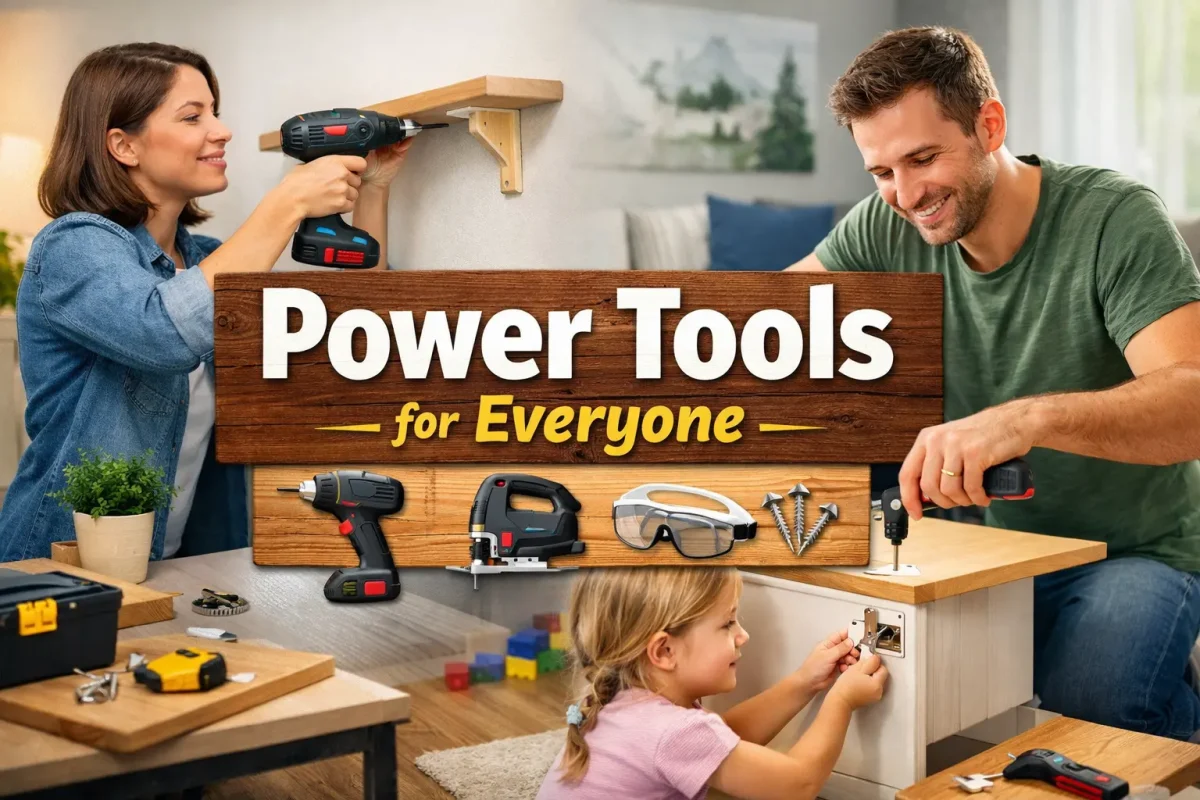
Today, power tools are quietly becoming part of everyday home life, used not by experts, but by ordinary people solving ordinary problems.
Where the Fear Comes From
Much of the hesitation around power tools comes from early experiences—or the lack of them.
For some, tools were never part of their household growing up. Repairs were always handled by specialists. For others, the few times they encountered power tools involved bulky machines, confusing controls, and loud noises.
Over time, this created a simple mental shortcut:
power tools = complicated + risky + professional-only.
In reality, most modern power tools are designed specifically for beginners.
Who Is Actually Using Power Tools Today?
Look inside a typical city apartment or suburban home, and you’ll find a growing range of everyday users:
-
Renters mounting shelves, curtains, and lighting
-
New homeowners assembling furniture and making small adjustments
-
Parents fixing loose fixtures and childproofing rooms
-
Creative hobbyists building small DIY projects
These people are not trained technicians. They’re simply individuals who prefer solving problems themselves rather than outsourcing every small task.
The motivation isn’t mastery—it’s independence.
How Tools Became More Beginner-Friendly
One reason power tools are now reaching a wider audience lies in how dramatically their design has evolved.
Modern tools emphasize:
-
Simple control layouts
-
Lightweight structures
-
Ergonomic grips
-
Built-in safety mechanisms
Instead of requiring strength or advanced technique, they reward careful handling and basic awareness. Clear instructions, intuitive operation, and safety-focused engineering reduce the chance of mistakes and lower psychological barriers.
For many beginners, the first successful use becomes a turning point: once fear is replaced by familiarity, hesitation fades quickly.
Common Beginner Misconceptions
Despite these improvements, several misconceptions still prevent people from trying:
“I’m not technical.”
Most household tasks involve basic actions—drilling, fastening, tightening—not advanced mechanics.
“I might break something.”
In reality, hesitation often causes more damage than careful action. Modern tools offer precision and control that reduce mistakes.
“I’ll only use it once.”
Small fixes appear constantly in everyday life. What feels like a one-time task often becomes recurring.
From Anxiety to Confidence
The first time someone uses a power tool, the experience is rarely perfect. There may be uncertainty, slow progress, or minor mistakes. But with each task, confidence builds.
That shift—from avoidance to engagement—has a noticeable effect on daily life.
Instead of ignoring loose screws or unstable furniture, people begin to address them immediately. Instead of living with minor inconveniences, they gradually shape their spaces to fit their needs.
This isn’t about becoming a DIY enthusiast. It’s about regaining control over small details that collectively influence comfort and quality of life.
Redefining What “Skill” Means
In the past, practical skills were passed down informally through families and communities. As modern life became more specialized, many of these skills quietly disappeared from daily routines.
Power tools, in a way, help bridge that gap.
They don’t replace knowledge—but they reduce the technical barriers that once made basic home tasks feel inaccessible. By making action easier, they encourage people to learn through doing.
And often, learning begins with a single small repair.
A New Relationship with Everyday Spaces
When people feel capable of maintaining and adjusting their surroundings, their relationship with home changes.
Rooms feel more flexible. Furniture becomes adaptable. Problems feel solvable.
Power tools, once symbols of industrial work, are gradually becoming instruments of everyday empowerment—quietly helping individuals feel more connected to the spaces they live in.
